21 Living Room Accent Wall Ideas That Wow
A thoughtfully designed accent wall can completely change how your living room looks and feels without requiring a full renovation. These living room accent wall ideas include modern paint treatments, warm wood details, statement wallpaper, practical storage solutions, and creative designs for both large and small spaces. Whether your room feels plain, unbalanced, dark, or unfinished, these ideas will help you create a stronger focal point while keeping the space comfortable, stylish, and connected to the rest of your home.
1. Create a Warm Wood Slat Accent Wall
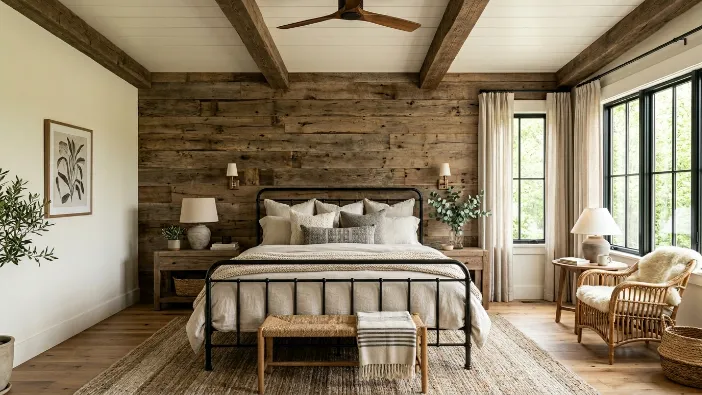
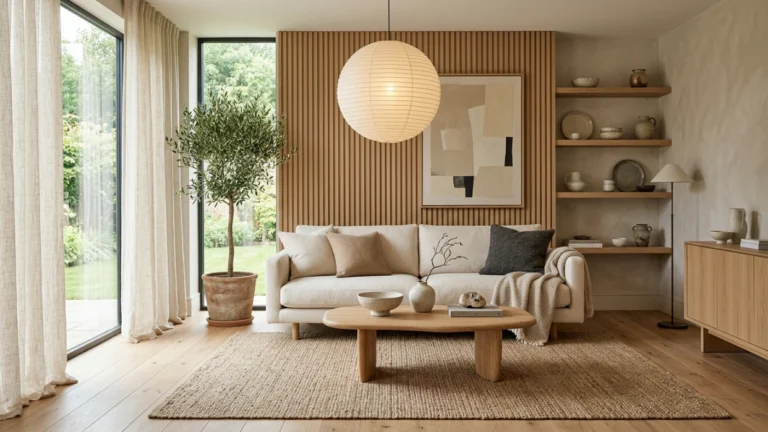
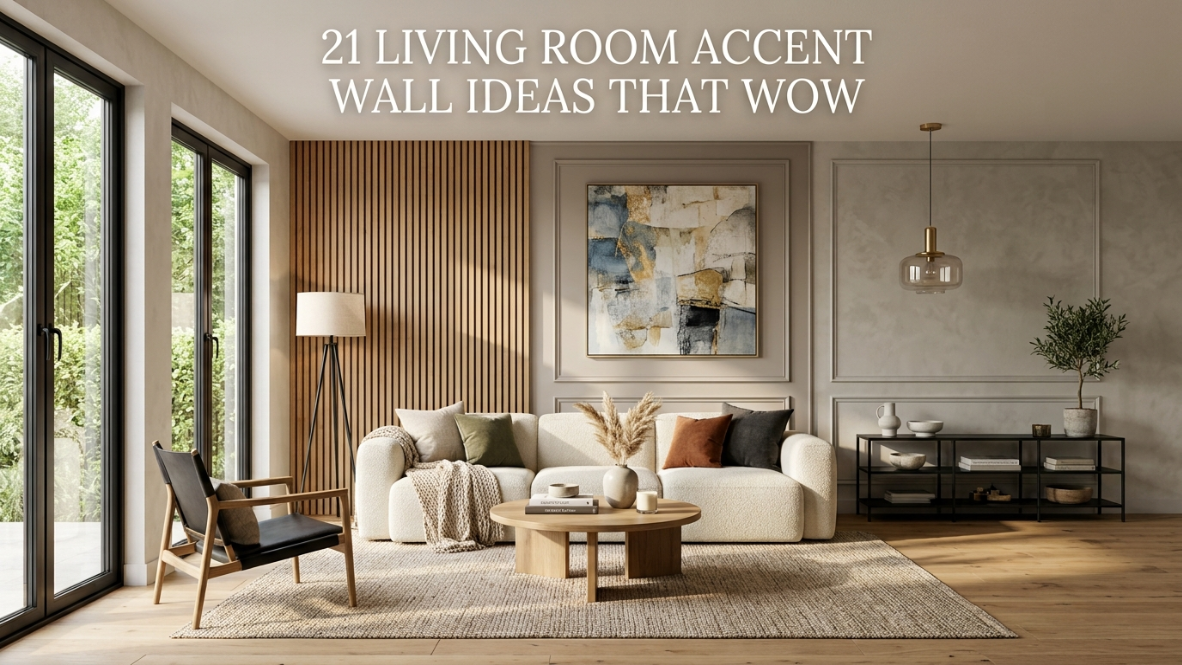
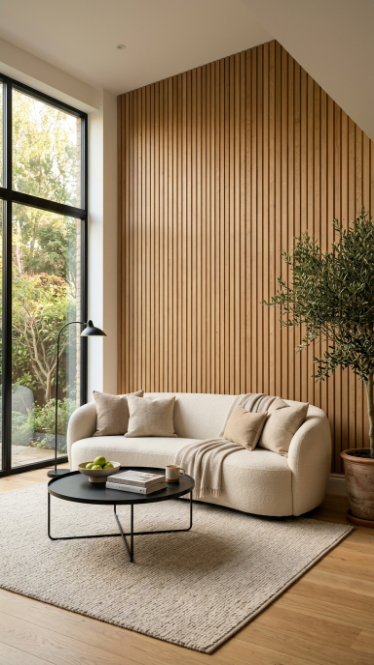
Vertical wood slats bring warmth, texture, and architectural detail into a plain living room. Install natural oak, walnut, or light-toned wood strips behind the television or main sofa to create a polished focal point. Keeping small, even gaps between the slats makes the wall feel modern rather than heavy. This idea works especially well in neutral rooms that need more character without introducing bold colors or busy patterns.
2. Paint the Fireplace Wall Deep Charcoal
A charcoal accent wall can make a fireplace feel more intentional and visually impressive. Instead of painting a random wall, use the room’s existing architecture to guide your decision. Deep gray creates contrast against white ceilings, pale flooring, and cream furniture while remaining easier to decorate than pure black. Add warm wood furniture, soft textiles, and brass details to prevent the space from appearing cold or overly dramatic.
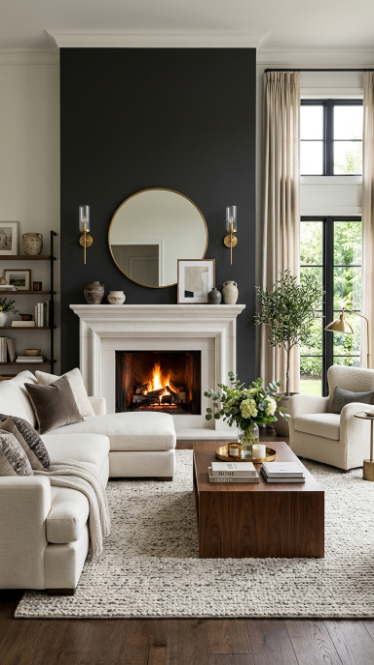
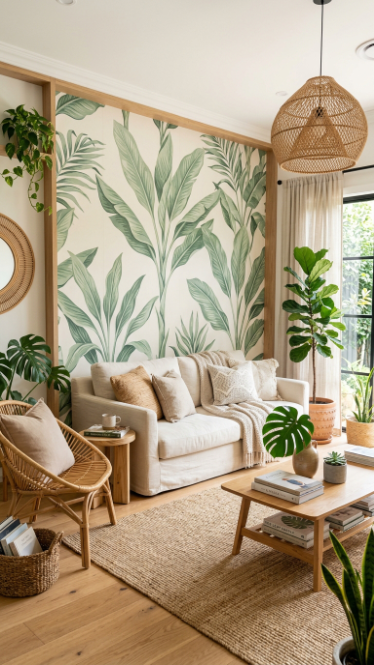
3. Use Oversized Botanical Wallpaper
Large botanical wallpaper can turn an ordinary living room into a memorable, story-filled space. Choose a pattern with oversized leaves, branches, or muted flowers rather than tiny repetitive prints. Position it behind the main sofa so it becomes the background for the seating arrangement. Pull two or three colors from the wallpaper into your cushions, curtains, or decorative accessories to make the entire room feel thoughtfully coordinated.
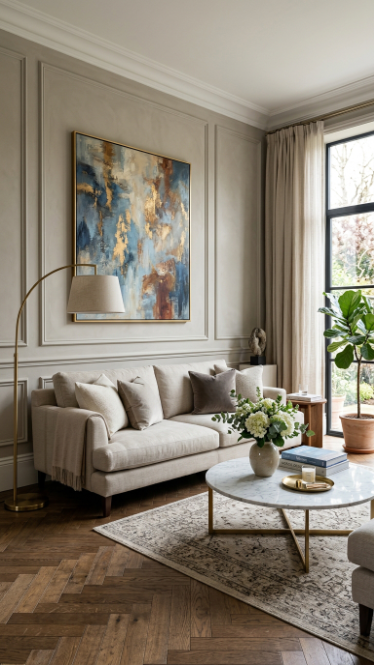
4. Add Picture-Frame Wall Molding
Picture-frame molding gives a living room the elegance of traditional architectural paneling without covering the wall in expensive materials. Create evenly spaced rectangular frames using slim molding strips, then paint the entire wall in one color. Soft beige, dusty blue, warm white, and muted green all work beautifully. This design solves the problem of a large empty wall by adding depth and structure while maintaining a calm, refined appearance.
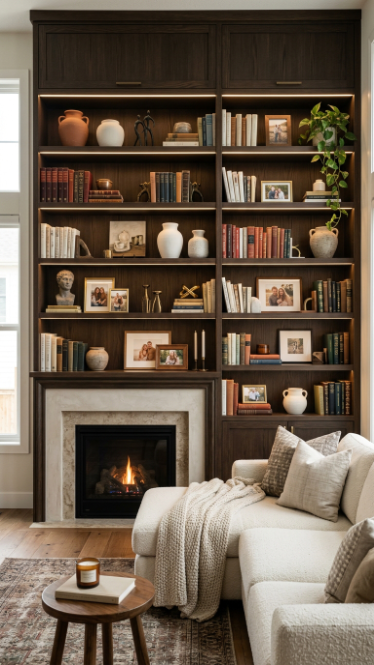
5. Design a Built-In Bookcase Accent Wall
A built-in bookcase wall combines decoration, storage, and personality in one practical feature. Use shelving around a fireplace, television, or central artwork to create visual balance. Style the shelves with books, framed photographs, ceramics, baskets, and a few meaningful objects rather than filling every available space. Painting the shelves and wall the same color creates a seamless custom look, even when the units are created using affordable modular cabinets.
6. Try a Soft Limewash Finish
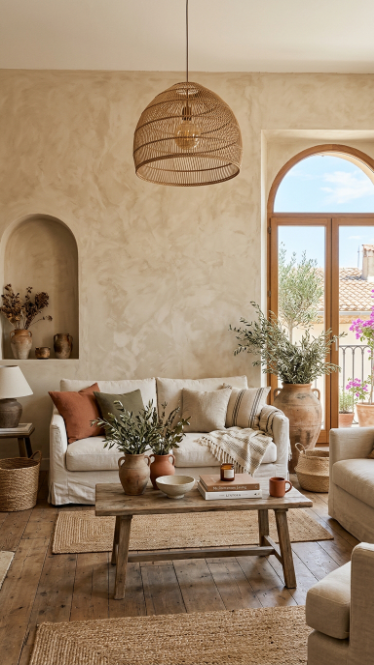
Limewash paint creates subtle movement and an aged, natural texture that regular flat paint cannot provide. It is ideal for living rooms that feel too new, plain, or visually flat. Choose warm beige, clay, mushroom, or pale gray for an understated finish. Apply the paint using broad, overlapping brushstrokes so the tonal variation remains visible. The result feels relaxed, artistic, and slightly European without becoming overpowering.
7. Create a Modern Color-Block Wall
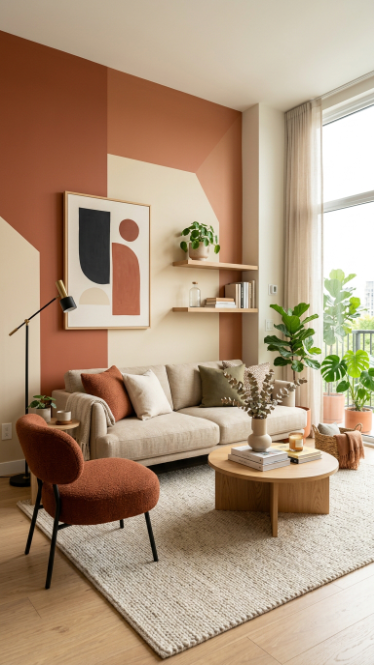
A color-block design is a creative solution when one solid accent color feels too predictable. Divide the wall using a clean horizontal, vertical, diagonal, or curved line, then combine two coordinating shades. For example, pair warm white with terracotta or pale beige with olive green. Use the darker color to frame furniture or artwork. This approach adds energy to the room while allowing you to control exactly how bold the finished wall appears.
8. Install Vertical Shiplap Paneling
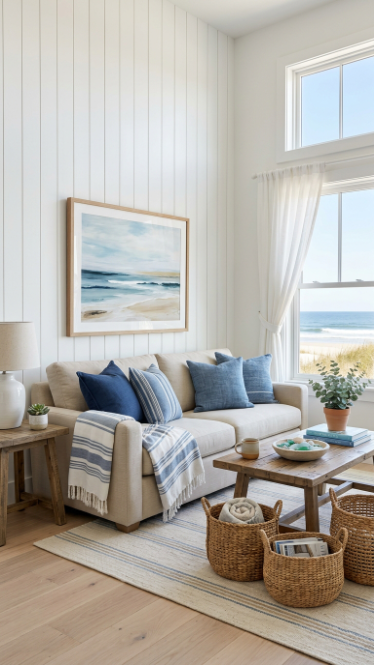
Vertical shiplap visually lifts the ceiling and makes a living room feel taller. It works particularly well in smaller homes, low-ceiling spaces, or rooms that need architectural detail. Paint the paneling warm white for a light coastal look, muted green for a natural style, or deep navy for stronger contrast. Keeping the surrounding walls simple allows the grooves and vertical lines to become the main decorative feature without making the space feel crowded.
9. Build an Arched Paint Feature
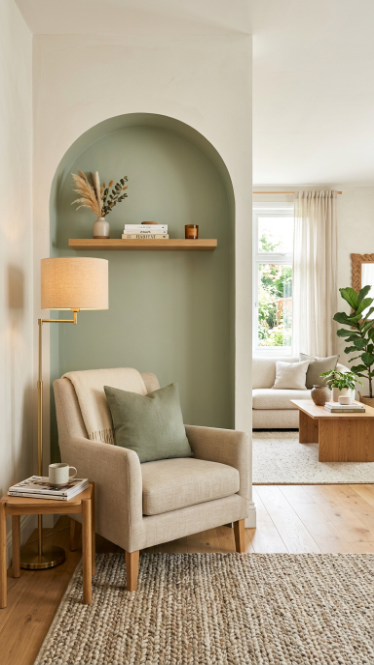
A painted arch creates the appearance of an architectural niche without construction work. Use it behind a console table, reading chair, shelving unit, or compact home office area. The curved shape softens rooms filled with straight furniture lines and adds a playful but controlled focal point. Select a color that is slightly deeper than the surrounding walls, and keep the edges smooth and symmetrical for a professional-looking result.
10. Display a Large-Scale Art Collection
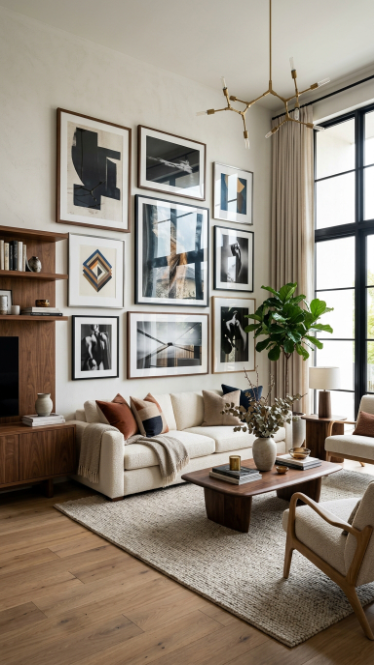
Instead of relying on paint or wallpaper, turn your artwork into the accent wall itself. Begin with one oversized piece or arrange several coordinated prints in a structured gallery. Use consistent frame colors to keep the display unified, especially when the artwork contains different styles. This approach is ideal for renters because it introduces color, character, and visual importance without permanently changing the wall surface or committing to a strong paint color.
11. Use Stone Veneer for Natural Texture
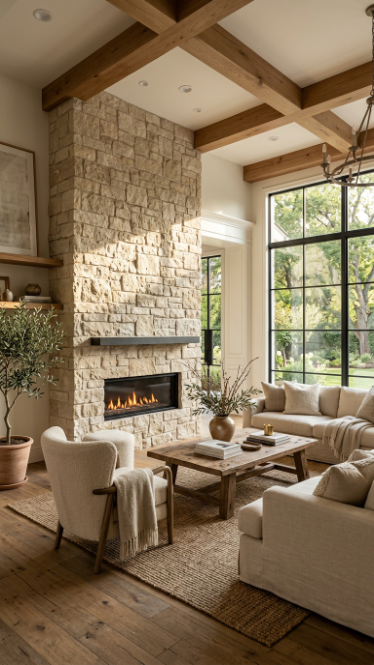
Stone veneer adds depth and natural beauty without the weight and expense of a full stone installation. Use it around a fireplace, behind a media console, or across one uninterrupted wall. Select thin-cut stone in warm gray, beige, or sandy tones to keep the room welcoming. Pair it with simple furniture and limited accessories because the material already provides significant texture. Soft lighting will highlight the stone’s uneven surface beautifully.
12. Paint the Wall a Moody Olive Green
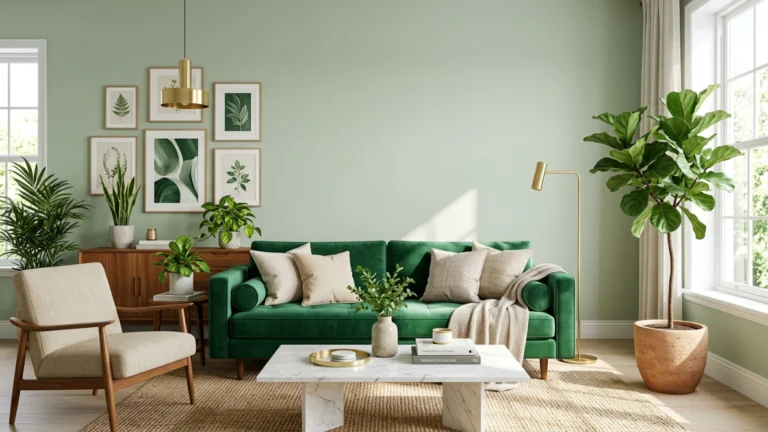
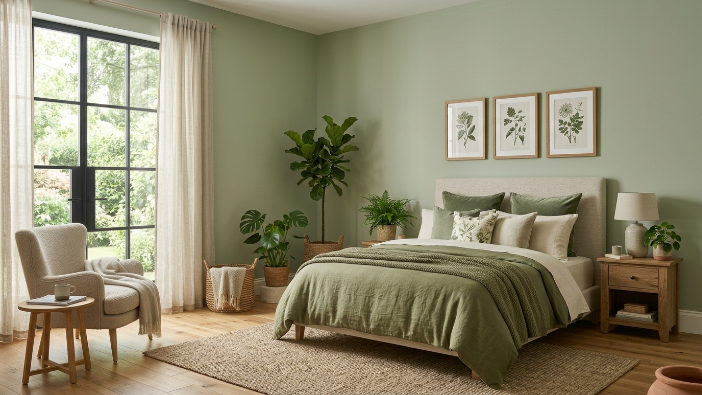
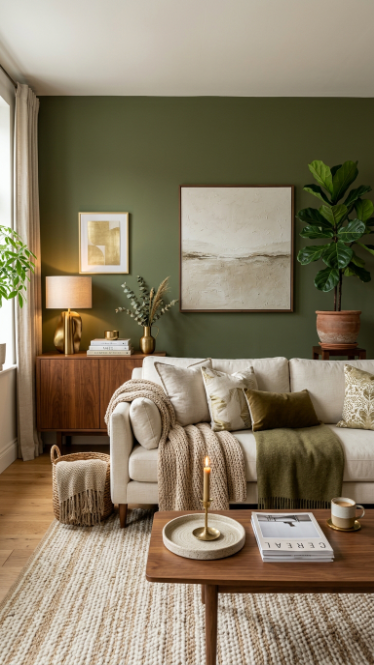
Olive green creates a sophisticated focal point while still feeling connected to nature. It works beautifully with tan leather, walnut wood, brass, cream upholstery, and woven materials. Use it behind the main seating area or fireplace to visually anchor the room. In darker living rooms, select a softer olive with warm undertones. In bright rooms, a deeper shade can create dramatic contrast without feeling as harsh as navy, charcoal, or black.
13. Create a Minimalist Concrete-Look Wall
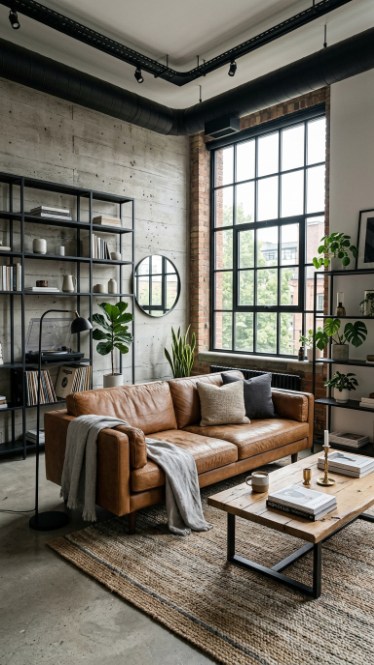
A concrete-look accent wall gives a living room an urban, modern character without requiring real poured concrete. Achieve the effect with specialty paint, plaster, or realistic concrete-style panels. Keep the finish slightly imperfect so the wall appears natural rather than printed. Balance the cooler texture with warm lighting, soft rugs, wooden furniture, and comfortable upholstery. This contrast prevents the industrial design from making the room feel unfinished or unwelcoming.
14. Frame the Television with Dark Paneling
A television often looks disconnected when it sits alone on a large white wall. Solve this problem by creating a darker paneled section behind it. Use painted wood panels, smooth MDF sheets, or narrow vertical strips to visually frame the screen. The darker background helps the television blend into the wall when switched off. Add a floating media console below to maintain a clean, organized, and intentionally designed entertainment area.
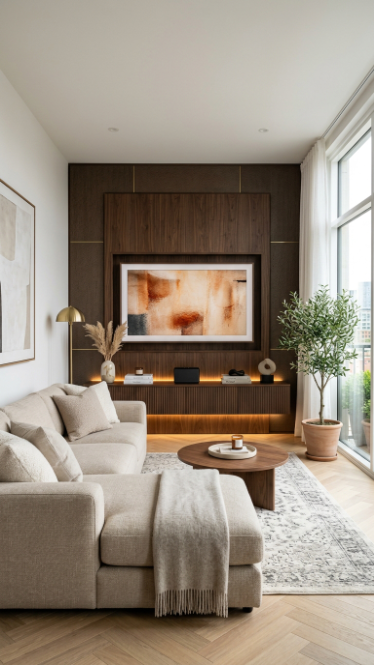
15. Add a Geometric Wood Trim Design
Geometric wood trim can transform a plain wall using affordable materials and paint. Arrange slim molding strips in diagonal lines, diamonds, or asymmetrical shapes, then paint the trim and wall in the same shade. The raised pattern creates shadows and dimension without requiring multiple colors. Keep the furniture and artwork relatively simple so the geometry remains clear. This project works especially well for homeowners who want a customized, hands-on design feature.
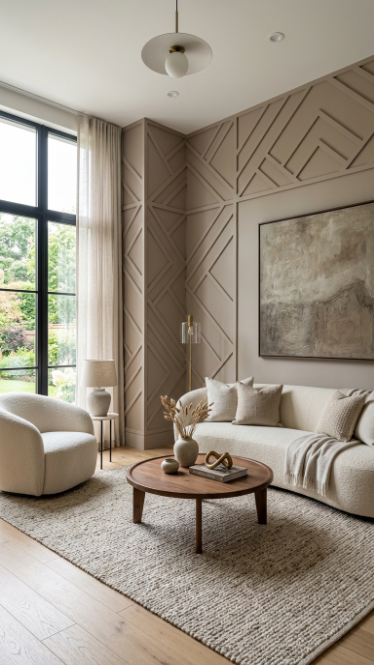
16. Use Floor-to-Ceiling Curtains as an Accent
An accent wall does not always need paint, paneling, or wallpaper. Full-width, floor-to-ceiling curtains can create softness, height, and visual drama, even when the windows cover only part of the wall. Extend the curtain rod beyond the window frame and position it close to the ceiling. Choose textured linen, velvet, or softly patterned fabric. This solution also improves privacy, controls light, and hides awkwardly positioned or mismatched windows.
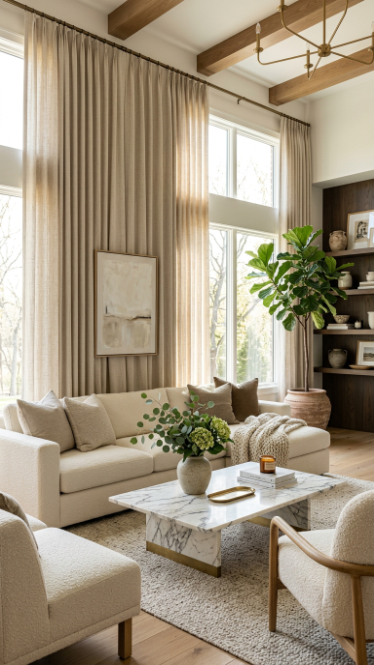
17. Introduce a Warm Terracotta Wall
Terracotta adds warmth and energy while remaining earthy and comfortable. It is particularly useful in living rooms that feel cold because of gray floors, white walls, or modern furniture. Use the color behind a cream sofa, wooden console, or collection of neutral artwork. Repeat the shade subtly through pottery, cushions, or patterned rugs. Avoid matching every accessory exactly; natural variations will make the room feel layered and more authentic.
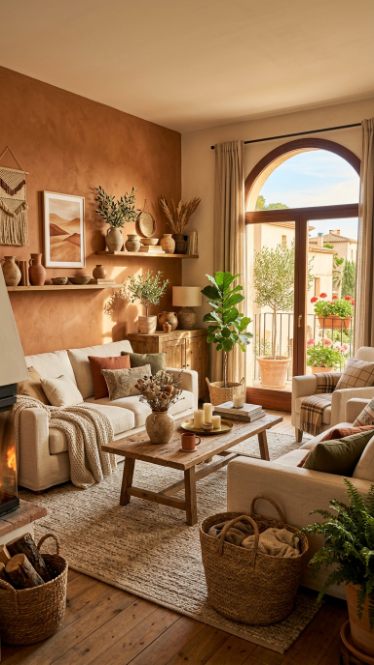
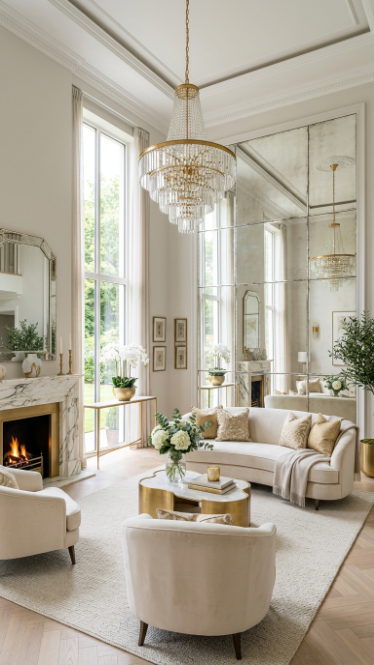
18. Create a Decorative Mirror Wall
A mirror-based accent wall can make a small or dark living room feel larger and brighter. Use one oversized mirror for a clean appearance or arrange several mirrors with similar frames for a collected look. Position them where they can reflect a window, artwork, or attractive furniture rather than clutter. Antique brass, black metal, and natural wood frames can also reinforce the room’s wider decorating style while adding useful visual depth.
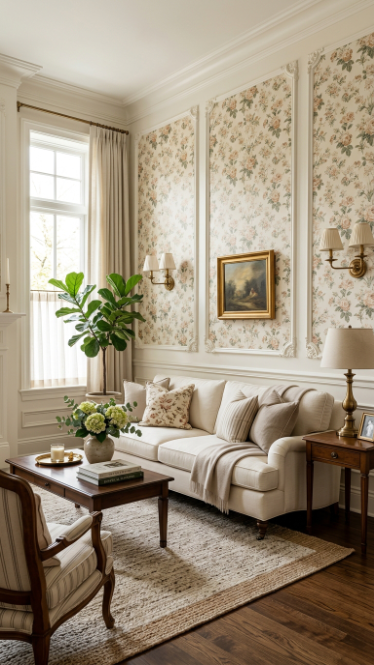
19. Add Wallpaper Inside Wall Panels
Combining wall molding with wallpaper creates a detailed designer look without covering the entire room in pattern. Install large rectangular molding frames, then place wallpaper inside each section. Botanical, toile, grasscloth, and subtle geometric prints work especially well. Paint the molding in a color taken from the wallpaper for a connected finish. This method controls busy patterns and turns them into framed decorative features rather than overwhelming the whole living room.
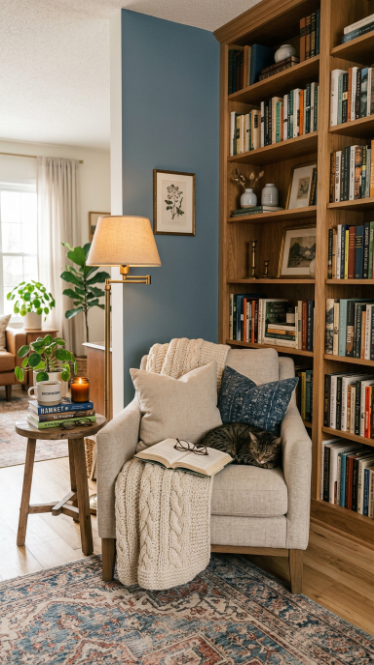
20. Design a Cozy Reading Nook Wall
Transform an unused corner into a storybook-inspired reading area by giving its wall a separate identity. Paint the section in a comforting shade, add a wall-mounted reading light, and place a comfortable chair beside a narrow bookshelf. A small framed print or textured wall hanging can complete the setting. This approach solves an awkward empty-corner problem while creating a functional destination that makes the living room feel more personal and thoughtfully arranged.
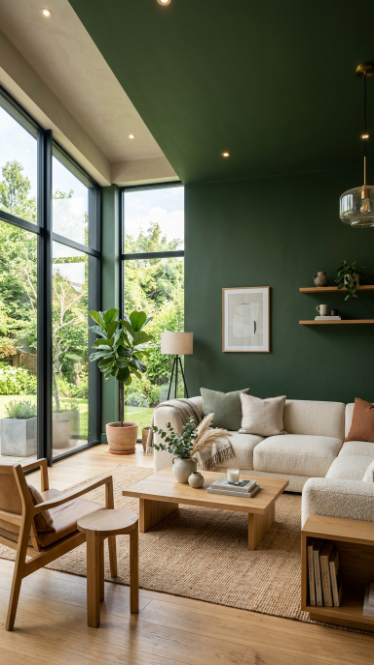
21. Paint the Ceiling and Accent Wall Together
For a bold, immersive look, continue the accent wall color across the ceiling. This technique can make a large living room feel more intimate and can visually define a seating zone in an open-plan home. Choose a muted, enveloping shade such as deep blue, warm taupe, or earthy green. Keep nearby walls lighter to preserve contrast. Soft lamps and layered lighting will prevent the darker surfaces from making the room feel closed in.
Conclusion
The best living room accent walls do more than introduce color; they solve visual problems, create balance, and give the room a clear focal point. From wood slats and elegant molding to wallpaper, built-in shelving, and creative paint treatments, each option can be adapted to your available space, decorating style, and budget. Begin with the wall that naturally attracts attention, then choose a finish that complements your furniture. Save these ideas on Pinterest so you can revisit your favorite designs when planning your makeover.