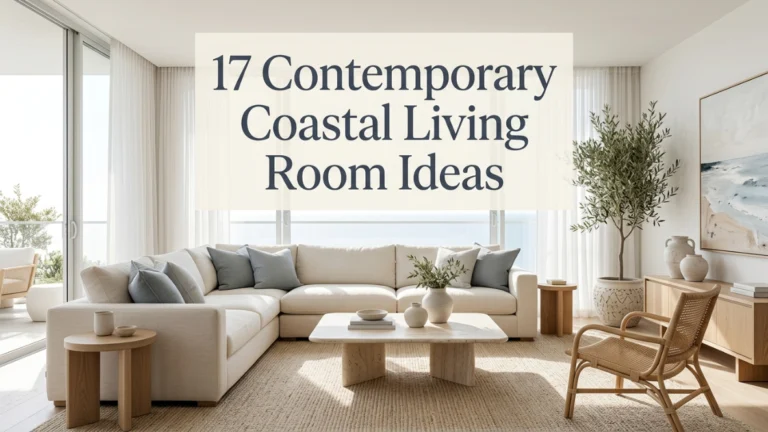
23 Small Living Room Ideas That Feel Bigger and Cozy
Small living rooms can feel stylish, comfortable, and surprisingly spacious when every design choice has a purpose. These small living room ideas focus on smart layouts, practical storage, lighter furniture, better lighting, and simple styling tricks that help a compact space feel more open without losing warmth or personality. Whether you live in an apartment, a small home, or simply have a tight lounge area, these ideas will help you use the space more effectively while creating a cozy, polished room that feels easy to live in every day.
1. Float Furniture Away From the Walls
Pushing every sofa and chair tightly against the walls can actually make a small living room feel more boxed in. Try pulling your main seating forward by a few inches to create breathing room around the furniture. This small change makes the layout feel more intentional and gives the room a softer, professionally styled appearance without requiring any new furniture.
2. Choose a Sofa With Visible Legs
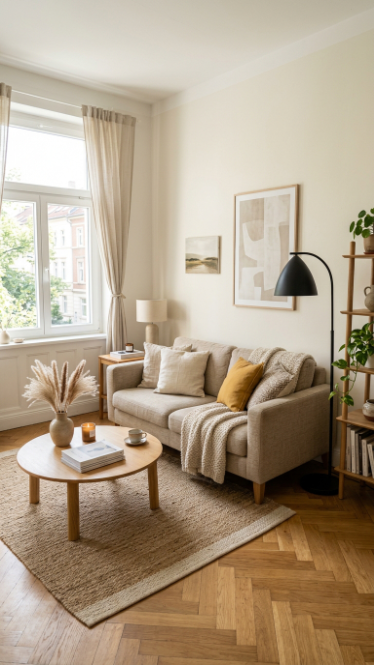
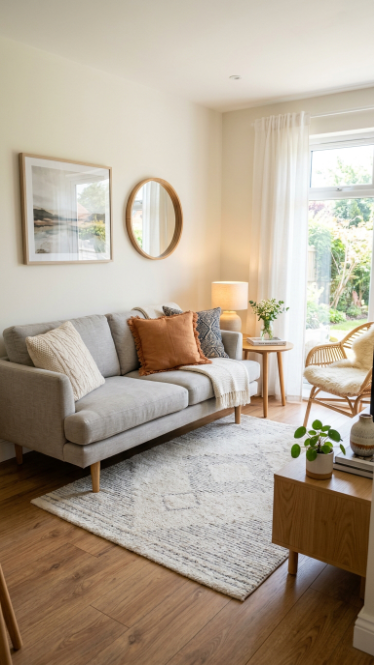
A bulky sofa that reaches all the way to the floor can visually consume a small room. Instead, choose a sofa with slim wooden or metal legs that allow you to see some flooring underneath. That open space tricks the eye into believing the room is larger while still giving you the comfortable seating you need for everyday lounging and entertaining.
3. Use One Large Rug Instead of Several Small Ones
Many homeowners assume a small living room needs a small rug, but that often makes the entire space look chopped up. Choose one generously sized area rug that reaches beneath the front legs of your sofa and chairs. It visually connects the furniture into one complete zone and makes the floor plan feel broader, calmer, and much more polished.
4. Build the Room Around One Statement Piece
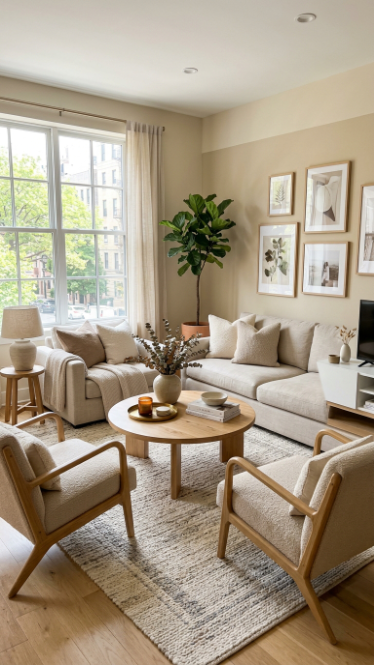
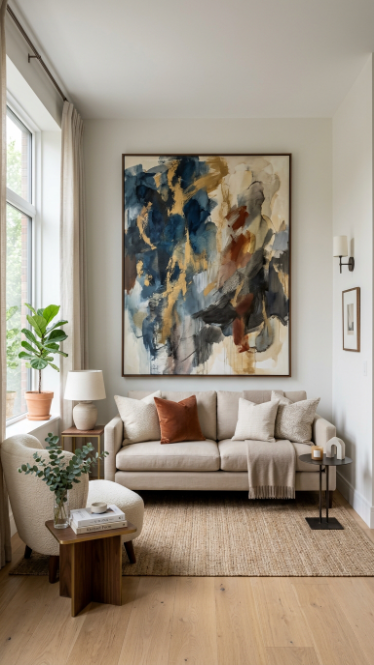
When every object tries to grab attention, a compact living room quickly becomes visually exhausting. Choose one standout feature, such as an oversized artwork, sculptural coffee table, dramatic lamp, or beautiful accent chair. Keep the surrounding decor quieter. Your eye then has one natural place to land, which makes the entire room feel organized rather than overcrowded.
5. Let Curtains Hang From Ceiling Height
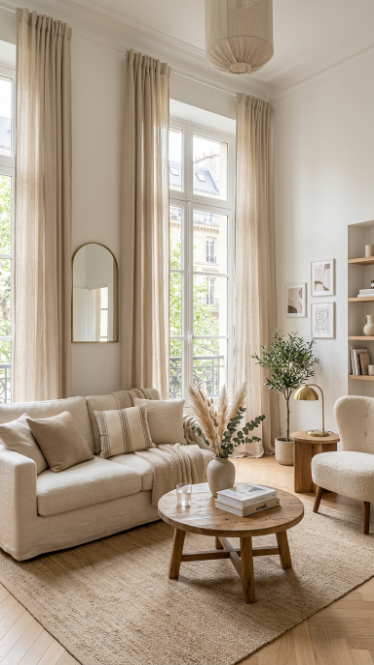
If your windows feel short or your ceiling seems low, repositioning the curtain rod can dramatically improve the proportions. Install it closer to the ceiling and let the curtains fall almost to the floor. This draws the eye upward and creates the illusion of taller walls. Use light, flowing fabric so natural daylight can still brighten the room.
6. Turn an Awkward Corner Into Useful Seating
That empty corner beside a window or doorway does not have to remain wasted space. A compact accent chair, narrow bench, or small upholstered stool can transform it into a useful reading or conversation spot. This works especially well in apartments where every square foot matters. Choose furniture with a slim profile so the corner feels functional rather than crowded.
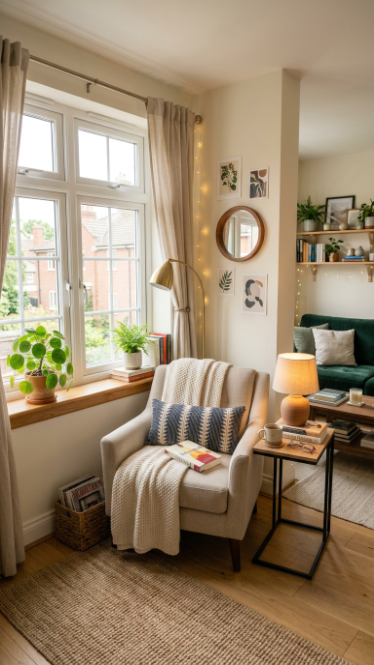
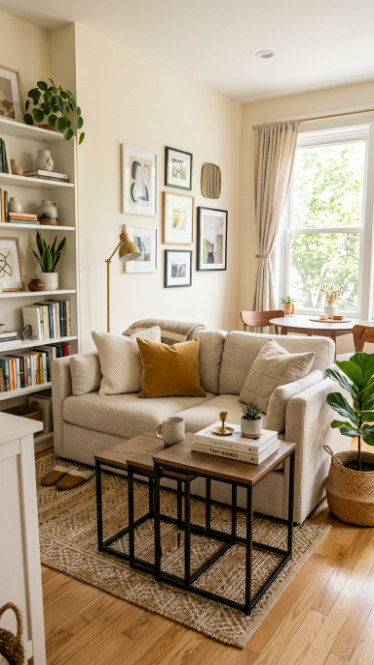
7. Replace a Bulky Coffee Table With Nesting Tables
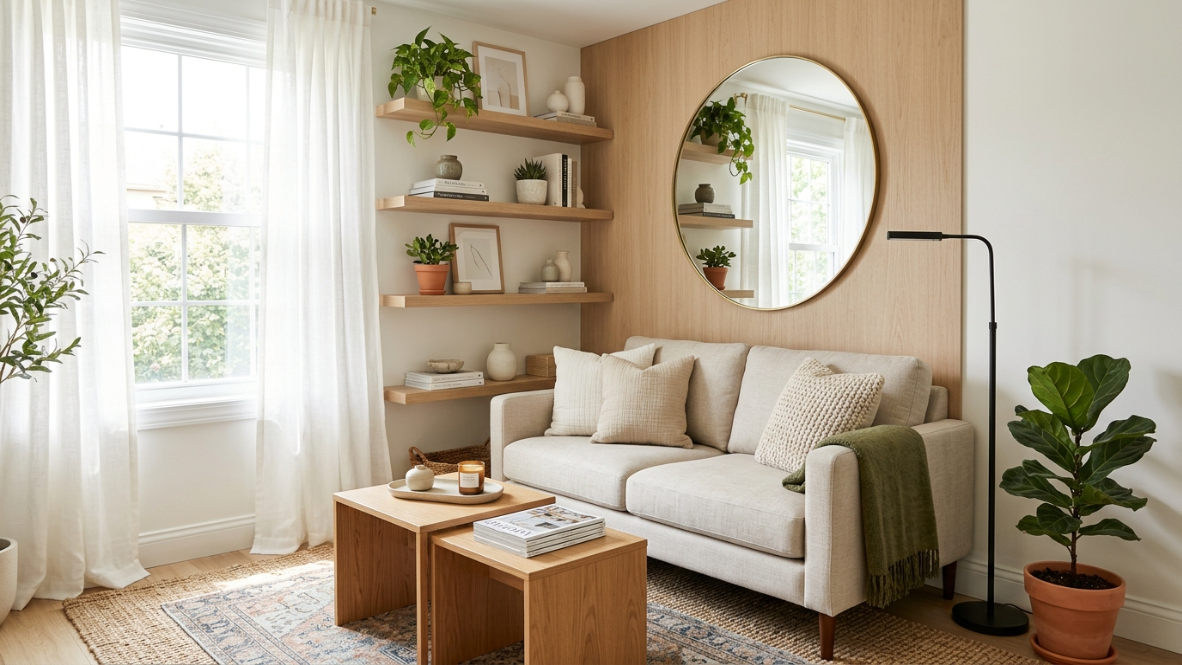
A traditional coffee table can occupy valuable walking space in a tiny living room. Nesting tables offer much more flexibility because they can remain stacked when you need floor space and separate when guests arrive. You can use one for drinks, another for snacks, and tuck them away afterward. This adaptable setup works beautifully for small homes and apartments.
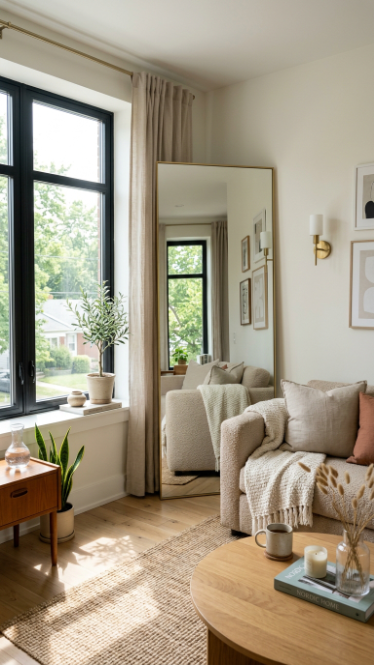
8. Use Mirrors to Borrow Light From Windows
A mirror becomes much more effective when its placement is intentional. Position one across from or beside a window so it reflects daylight back into the room. During darker hours, it can also multiply the glow from lamps. Instead of simply decorating an empty wall, the mirror becomes a practical tool that makes the living room feel brighter and visually deeper.
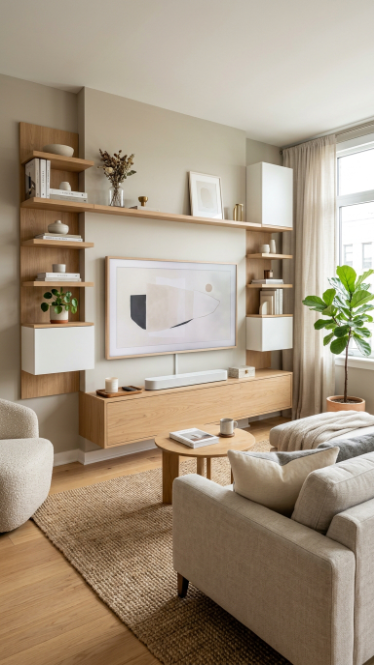
9. Create Storage Around the TV Wall
The television wall often becomes wasted vertical space. Instead of adding several separate cabinets, consider slim built-in shelves, floating cabinetry, or a compact media unit with closed storage. Keep everyday clutter behind doors while displaying only a few attractive objects. The result feels cleaner and gives your small living room valuable storage without filling additional floor space.
10. Keep the Main Color Palette Light and Layered
White is not the only option for making a small room feel open. Soft beige, warm cream, pale greige, muted taupe, and gentle stone shades can create the same spacious effect while feeling warmer. Layer several related tones through the walls, sofa, rug, and textiles. The subtle variation creates depth without introducing harsh visual breaks that can shrink the room.
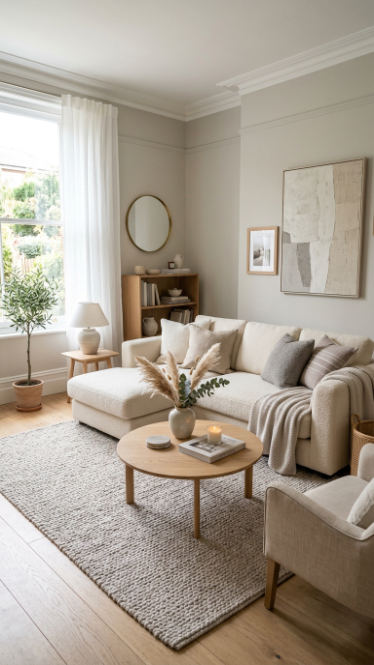
11. Add Personality Through Small Color Moments
A neutral room can easily become bland if every surface looks the same. Instead of introducing several large colorful pieces, bring personality through smaller accents such as pillows, books, ceramics, artwork, or a throw. Imagine a cream living room with just a few deep green or rust details. The room stays visually calm while still feeling personal and thoughtfully decorated.
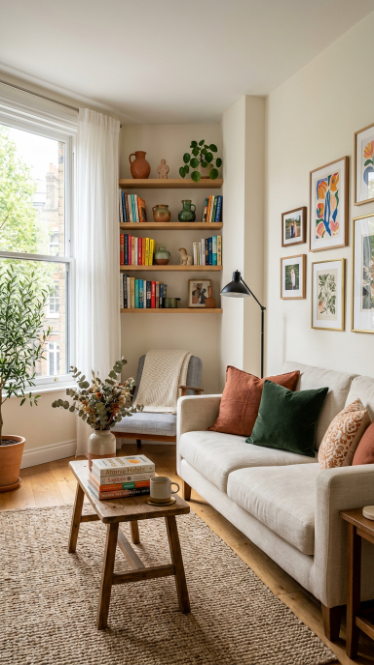
12. Use Wall-Mounted Lighting to Free Table Space
Small side tables quickly become overloaded with lamps, drinks, books, and everyday essentials. Wall sconces or plug-in wall lights remove one of those competing objects entirely. Install them near the sofa or reading chair to create practical lighting without taking up valuable surface area. This is especially helpful when your living room cannot comfortably fit full-size end tables.
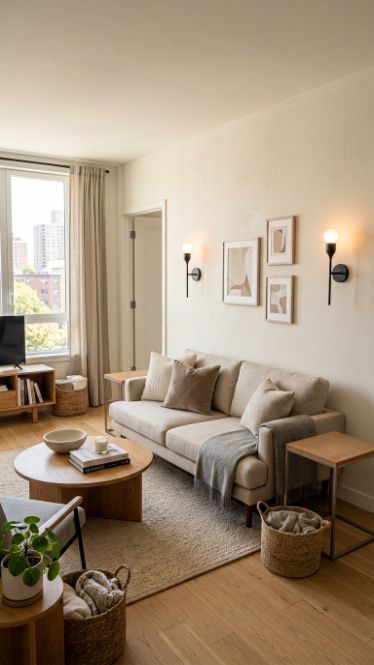
13. Pick an Ottoman That Works Overtime
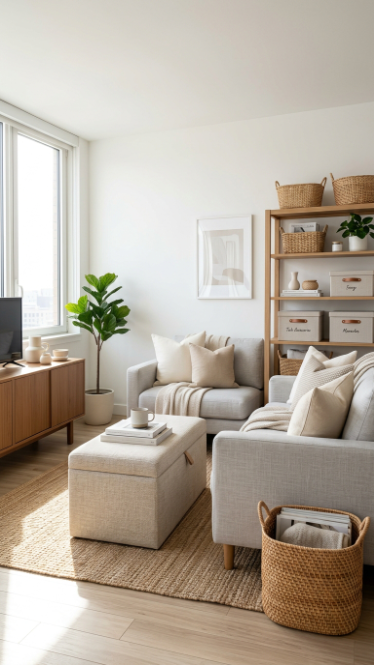
In a small room, furniture should ideally serve more than one purpose. A sturdy upholstered ottoman can work as a footrest, extra seat, coffee table, and sometimes hidden storage. Place a tray on top when you need a stable surface for drinks. When friends visit, remove the tray and instantly gain another seating option without storing extra chairs.
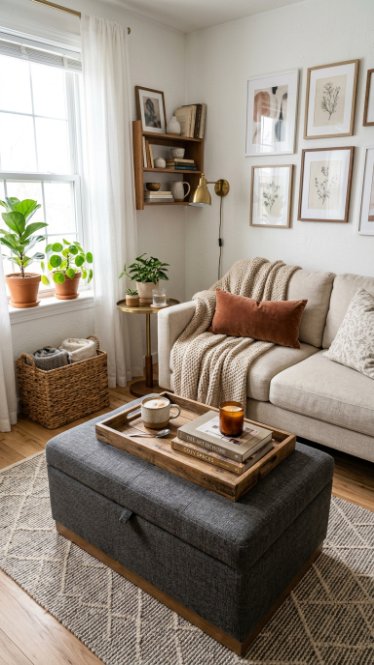
14. Style Shelves With More Empty Space
One common small-space mistake is filling every shelf completely. Even beautiful books and decor can look overwhelming when they are packed together. Leave intentional gaps between objects and group items in small clusters. Think of empty space as part of the design. Your shelves will look more curated, and the entire living room will instantly feel calmer and less crowded.
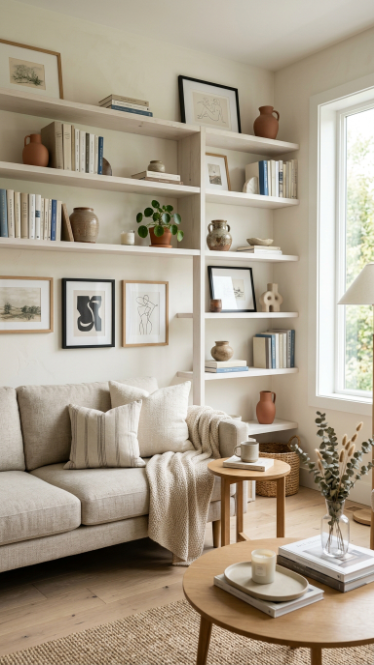
15. Choose Furniture That Matches Your Actual Lifestyle
A large sectional might look appealing online, but it can become frustrating if it blocks pathways or dominates your room. Before buying furniture, think about how you genuinely use the space. If only two people live there, a compact sofa and movable chair may work better. Designing around your real routine prevents wasted space and makes the room easier to enjoy.
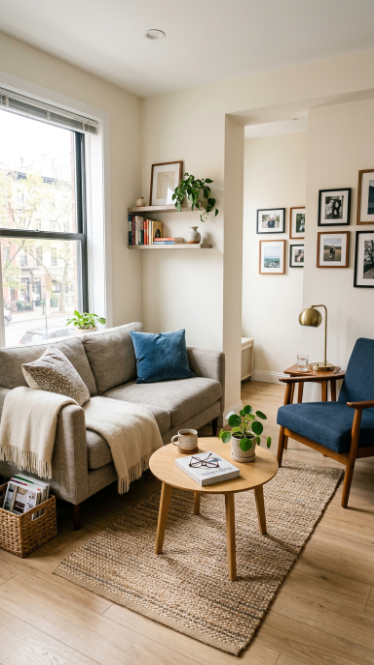
16. Use Vertical Storage Instead of Wide Cabinets
When floor space is limited, the walls become your best storage opportunity. Choose tall bookcases, narrow shelving units, or floor-to-ceiling cabinets instead of short, wide furniture. Going upward provides plenty of storage while using a much smaller footprint. Keep heavier items near the bottom and lighter decorative pieces higher up so the room still feels visually balanced.
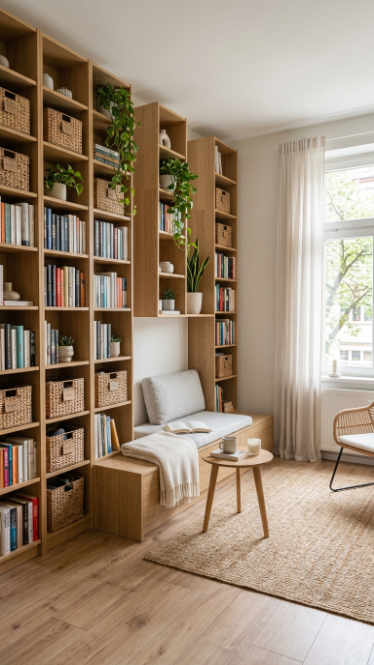
17. Create a Clear Walking Path
Sometimes a living room feels tiny because the furniture interrupts natural movement rather than because the room is actually too small. Stand at the entrance and notice how you walk toward the sofa, window, or adjoining room. Rearrange furniture so there is one obvious pathway. Once movement becomes effortless, the entire space usually feels noticeably more comfortable and spacious.
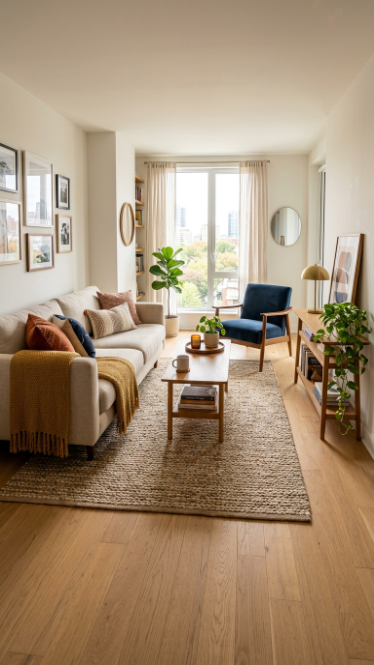
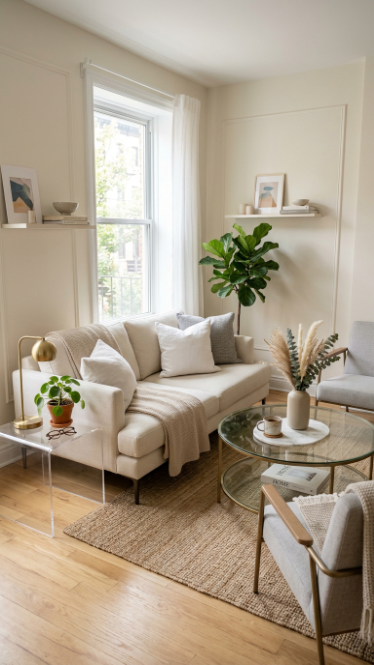
18. Use Glass or Acrylic for Visual Lightness
If your living room already contains a substantial sofa or storage unit, avoid adding another visually heavy piece. A glass coffee table or clear acrylic side table provides the same functionality without blocking your view of the floor. Because the eye can visually travel through the furniture, the room feels less crowded while still maintaining all the practical surfaces you need.
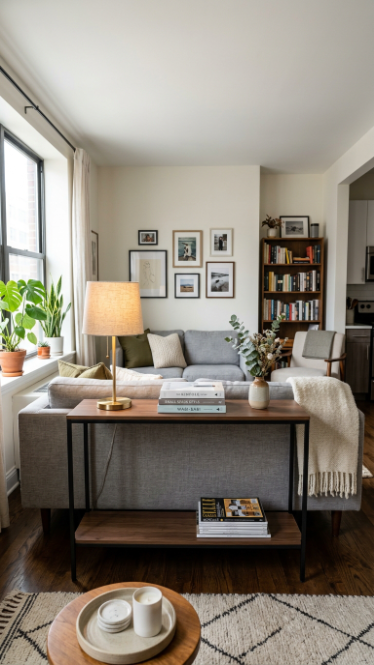
19. Make a Narrow Console Work Behind the Sofa
A few inches behind the sofa can become surprisingly useful. Add a slim console table for a lamp, books, decorative objects, or charging devices. This works especially well when you do not have room for side tables. Choose a shallow design that does not interfere with walking space, and you gain another functional surface without changing the main seating arrangement.
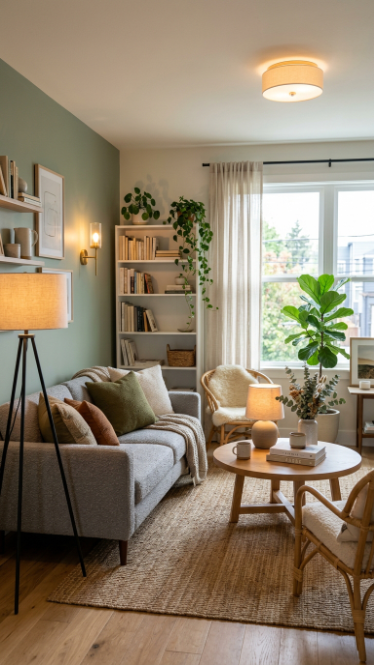
20. Layer Lighting Instead of Relying on One Fixture
A single bright ceiling light can make a small living room feel flat and uninviting. Combine several softer light sources instead, such as a floor lamp, wall sconce, table lamp, and subtle overhead lighting. Different pools of light create depth and help define areas within the room. In the evening, the space feels warmer, more comfortable, and visually more dimensional.
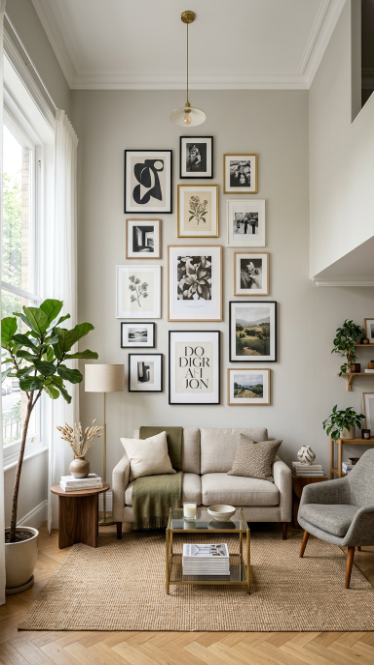
21. Use Artwork to Guide the Eye Upward
Artwork placement can influence how tall your living room feels. Instead of keeping every frame at the same low level, create a vertical gallery arrangement or hang one tall piece that naturally draws attention upward. This technique takes advantage of unused wall height and creates visual movement. Keep the arrangement relatively simple so it adds interest without producing unnecessary clutter.
22. Hide Everyday Clutter in Attractive Storage
Remote controls, chargers, toys, paperwork, and miscellaneous objects can make even a beautifully designed small living room feel messy. Give these everyday items designated hiding places inside baskets, lidded boxes, drawers, or storage ottomans. The goal is not to remove everything from the room but to make resetting the space quick, so it remains calm and welcoming every day.
23. Leave One Area Deliberately Empty
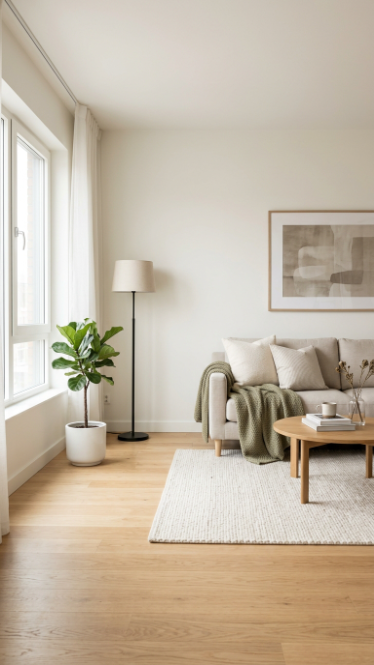
It can feel strange to leave part of a small living room undecorated, but empty space is often what makes good design work. Resist the temptation to fill every corner with a plant, basket, stool, or table. One open section of flooring or wall gives the eye somewhere to rest. That breathing room can make the entire layout feel noticeably larger and more luxurious.
Conclusion
A small living room does not need to feel crowded or limited. The biggest difference often comes from smarter furniture placement, better storage, lighter visual choices, and knowing when not to add another piece of decor. Start with one or two ideas that solve the biggest problem in your room, then build from there. Save these 23 small living room ideas on Pinterest so you can return to them whenever you are ready to refresh your space.